Wednesday, 28 March 2012

Exams


At the moment it’s exam time at St. Peter’s and in all the other schools in Lesotho.

The school year is divided up into four quarters, and the students sit exams at the end of each quarter. Because the school year starts in January, these are the first exams of the year. In November, each student has to pass their final exams to go up to the next school year (if they fail, they have to repeat the year). To pass they need a mark of 40%, which is 4 out of 10.

The Class 7 children are the oldest in the school and will try to get the Junior School’s leaving certificate at the end of this year. They can get a first, second or third class pass, or a fail. If they fail, they can’t go to secondary school, so all the students try extra hard in this year.

Monday, 19 March 2012

Athletics


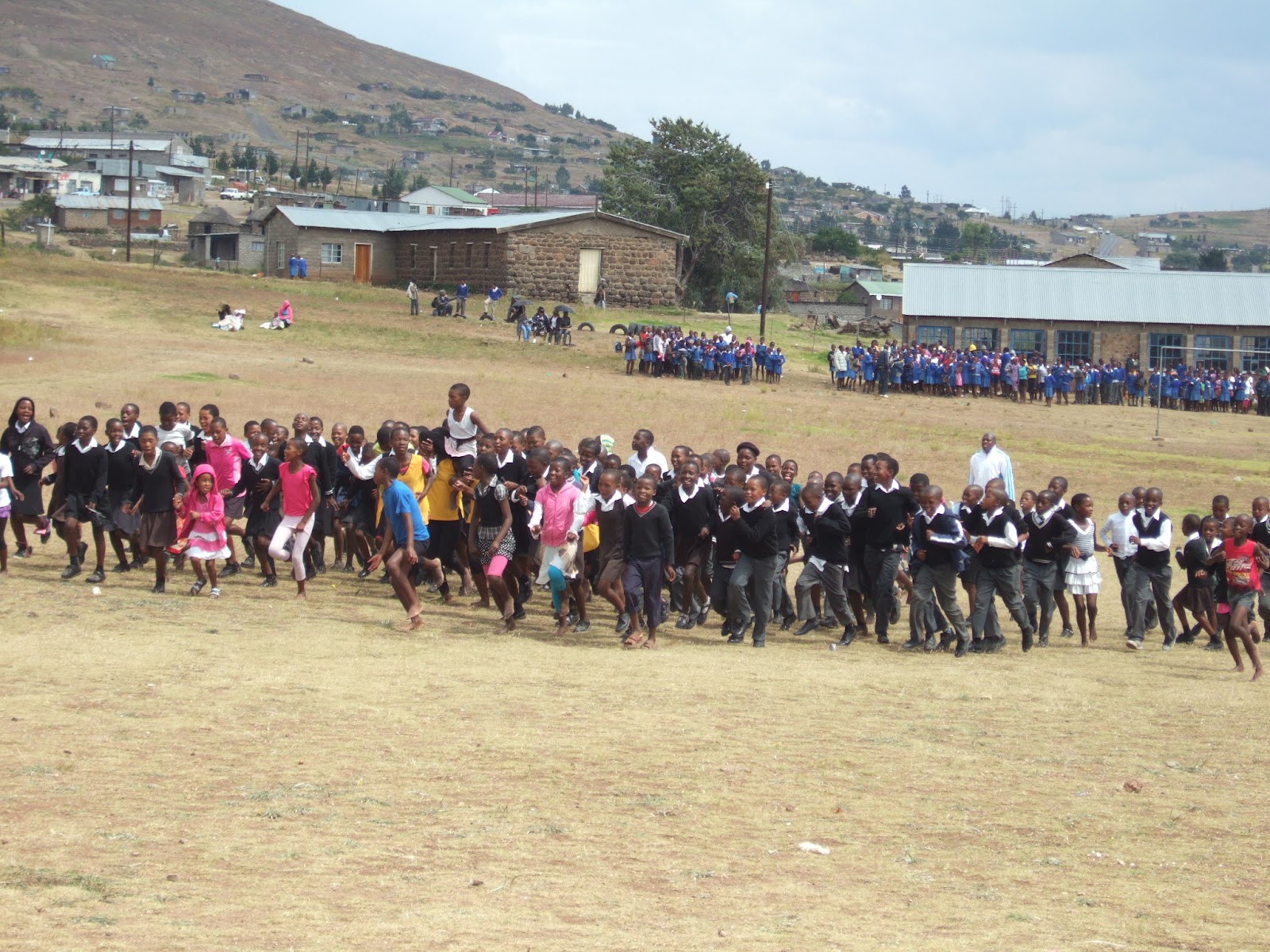
On Friday we had a local athletics competition: where 8 schools from Mokhtolong town competed against each other in track athletics from 100 metre to 3000 metre races. It was part of a bigger competition, so every primary school in Lesotho took part in a day like this. The 3 winners from each race will go through to the district competition next Friday; and the 3 winners from those races go to the national competition at the end of the month. After that, the national winners will go on to the southern Africa athletics competition in Botswana, so there is a great prize for those who do well.


At this stage however, it was a friendly local sports day; and a good day out for everyone, whether they were racing or not. Most of the town schoolchildren came, and each school took up a position around the track to cheer on their athletes. Everyone chanted songs and danced through the day. Some of the race winners were collected by their schoolmates and carried high across the field.


Tuesday, 13 March 2012

Resources

When you are in school, hopefully you have enough things in your classroom to get creative with. In Lesotho, there are not always enough materials and toys for the students to use, so they make their own.
 
Here, class 5 in St Peter’s are using homemade paint and sticks to paint with, as we can’t buy paint or brushes in Mokhotlong. We made the paint from flour, water and food colouring. It worked quite well.


In the playground, the children make their own toys too. One child made this push-along toy car from mud, stones and reeds; and these children are playing with a football made from carrier bags.


Monday, 5 March 2012

Happy St David’s Day!


Even though we’re thousands of miles from Wales, we still celebrated St David’s Day at St. Peter’s. Although ours had a twist – it was a Lesotho Wales Cultural day, with all the things you might expect on St. David’s Day and more.

After a lot of hard work preparing, all the school children met at 8:00am at a football ground near school. From there, we marched all the way through town – all 680 of us! Half of us were dressed in Basotho costume and the other half in Welsh costume. After we had let everyone in Mokhotlong know it was St. David’s Day, we went to school where the real celebration began.

Classes Reception to 3 started our event with races, football and netball. Then Class 7 sang the Welsh national anthem beautifully. After that, we had many dances, songs and short speeches, some Welsh and some Basotho. Everyone had a wonderful time and we even got a mention on Radio Lesotho!

Sunday, 26 February 2012

The Katse Dam


Last week, two of the schools in Mokhotlong were visited by teachers from their partner schools in Wales: Richmond Park in Carmarthen and Ysgol Llanbedr Pont Steffan in Lampeter. Their host schools decided to take them to see the Katse Dam in the middle of Lesotho, so we teachers in the other town schools went along too.
 
Katse Dam is the largest dam in Lesotho. You can see it here – the dam wall is 185 metres tall and 710 metres wide.

Rainwater in the mountains of Lesotho is collected and stored in reservoirs behind large dams like this one. The water is then sent through tunnels to South Africa for people to drink.

The government of Lesotho is paid by the South Africans for the water but not everyone is happy about this. The soil in the valleys near the rivers in Lesotho is the most fertile – the best land for people to grow crops on. When these valleys are flooded to create a reservoir of water, the land is lost. The local people then have to move to other places with soil that is not so good for growing their crops in.